

Experiments in composite ethnography (II)
What is a Shoreline? Or: Where Less is More in Environmental Ethnography
BY ANGELICA PLIEGO AND KREGG HETHERINGTON
This is the second in a five-part series of posts reflecting on the Graduate Summer Institute in Mess and Methods, which was hosted by the Waterways Collective in 2025. The Institute was an intensive training in collaborative, multimodal ethnographic methods that took Montreal's rivers, shorelines, and water infrastructure as its object of research.
Many of the projects undertaken at the Concordia Ethnography Lab begin from the idea that the object of research should be constituted collaboratively. This approach is excellent for creating a synergy between group members and for revealing the material multiplicity of human environments (Hetherington 2025). It can also lead to unruly pluralism, and become a hindrance to research if we don’t learn to rein it in. This was one of the experiences coming out of our Summer Institute. There, we were trying to curate a rapid version of composite ethnography, where students could create, in a matter of days, a collaborative study of a piece of shoreline. One key takeaway from the Institute is the difficulty of striking a balance between complexity and simplicity in research. From the beginning, avoided foreclosing anyone’s ideas or approaches. But as we discovered in trying to be as open as possible about the definition of “shoreline,” there was a point of diminishing pedagogical returns if we didn’t make clear distinctions and cuts.
The teaching team for the Summer Institute chose the shoreline as our ethnographic object months before the course started. We set out to find sites along the shore that could work in a class setting. Two potential sites emerged from our discussions: Sarah Yems was interested in Parc Dieppe as an isolated spit of land close to one of the surfing waves she was researching for her doctorate. Patrizio McClelland was interested in the Verdun beach, a place of extravagant socializing and biodiversity, which happened to be blocks from where he lived. We created rudimentary historical archives for both sites, then set out to visit them, make some observations, and do some preliminary video and sound recordings.
Even though the two sites were separated by a few kilometers of post-industrial neighbourhoods, we tacitly thought of these as part of a single stretch of shoreline. The question arose a couple of times about whether this was a fair assumption to make, but we didn’t initially try to answer it. We were in an exploratory phase and hadn’t even decided where the course would take place. But the question lingered, unanswered: were these two sites merely parts of a single phenomenon, or were they separate, comparative cases, or did they have some more specific relation to each other, since Verdun was upstream from Dieppe? For the time being, they sat in uneasy, undefined relation to each other.
Parc de Dieppe: Land of Manufactured Contrasts
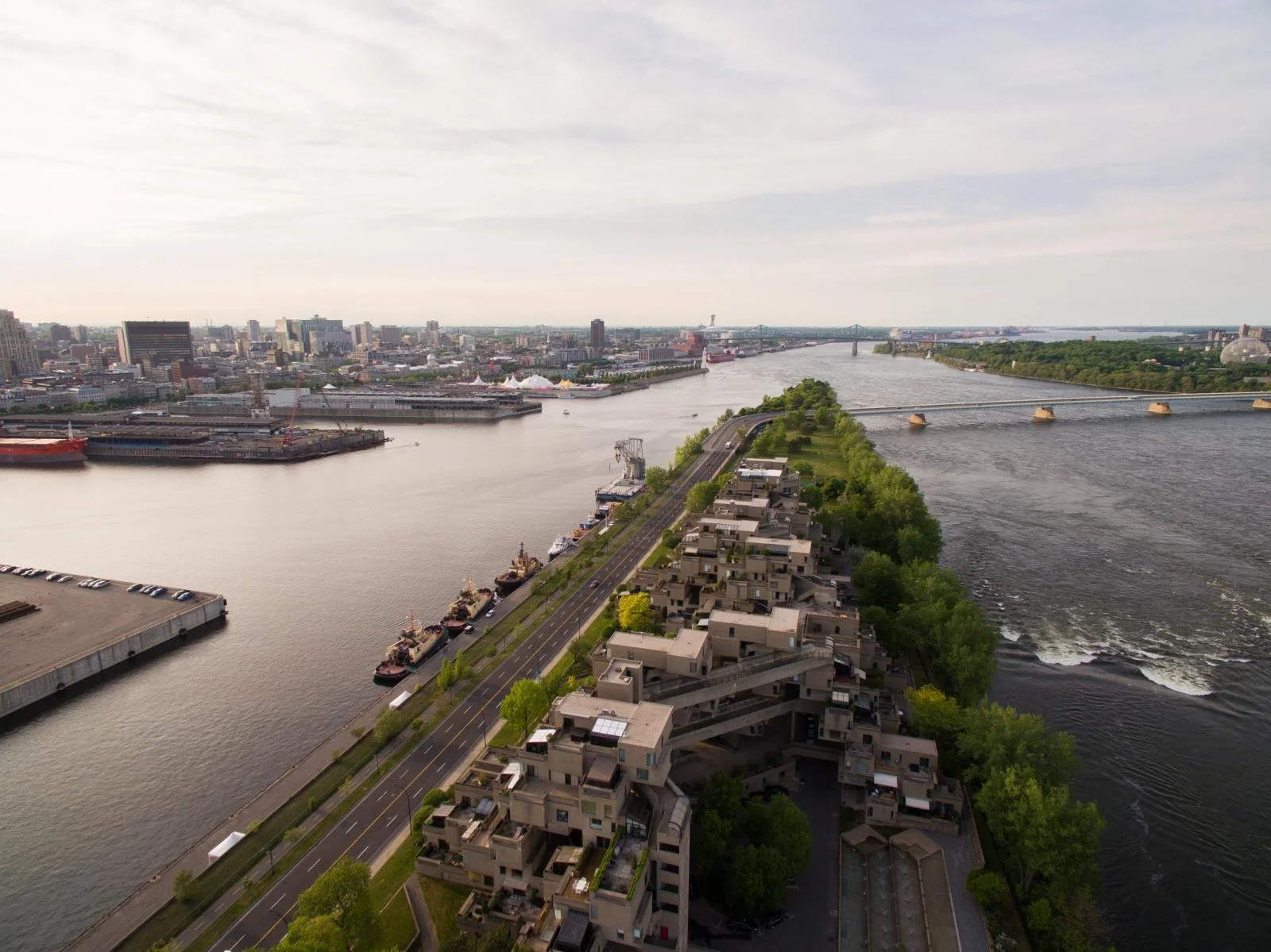
Photo 1. Parc de Dieppe.
Parc de Dieppe is located on a peninsula of landfill that has been radically transformed over the past decades. Its creation dates back to Montreal’s 1886 flood, which devastated the old town. In response, the city built the Mackay Pier to help prevent ice dams during the spring melt. The site was transformed when Montreal hosted the 1967 World's Fair, when it became a bridge footing for new artificial islands that would host the Expo’s pavilions, and the site of an infamous modular housing development known as Habitat 67.
The Parc de Dieppe was created later on the end of this peninsula by planting vegetation and walking paths over the land-fill rubble. It’s a pretty park but hard to access, and it tends to have few people in it. The land itself battles the river, which is slowly eroding its shoreline, and erosion makes many layers of its history immediately visible. For instance, in one of the designs for the park, a sidewalk allowed people to get close to the water. Now, this access is blocked by a chain-link fence. A stairwell leading from the pagoda at the end of the park has broken away, and signs everywhere warn people away from the water.
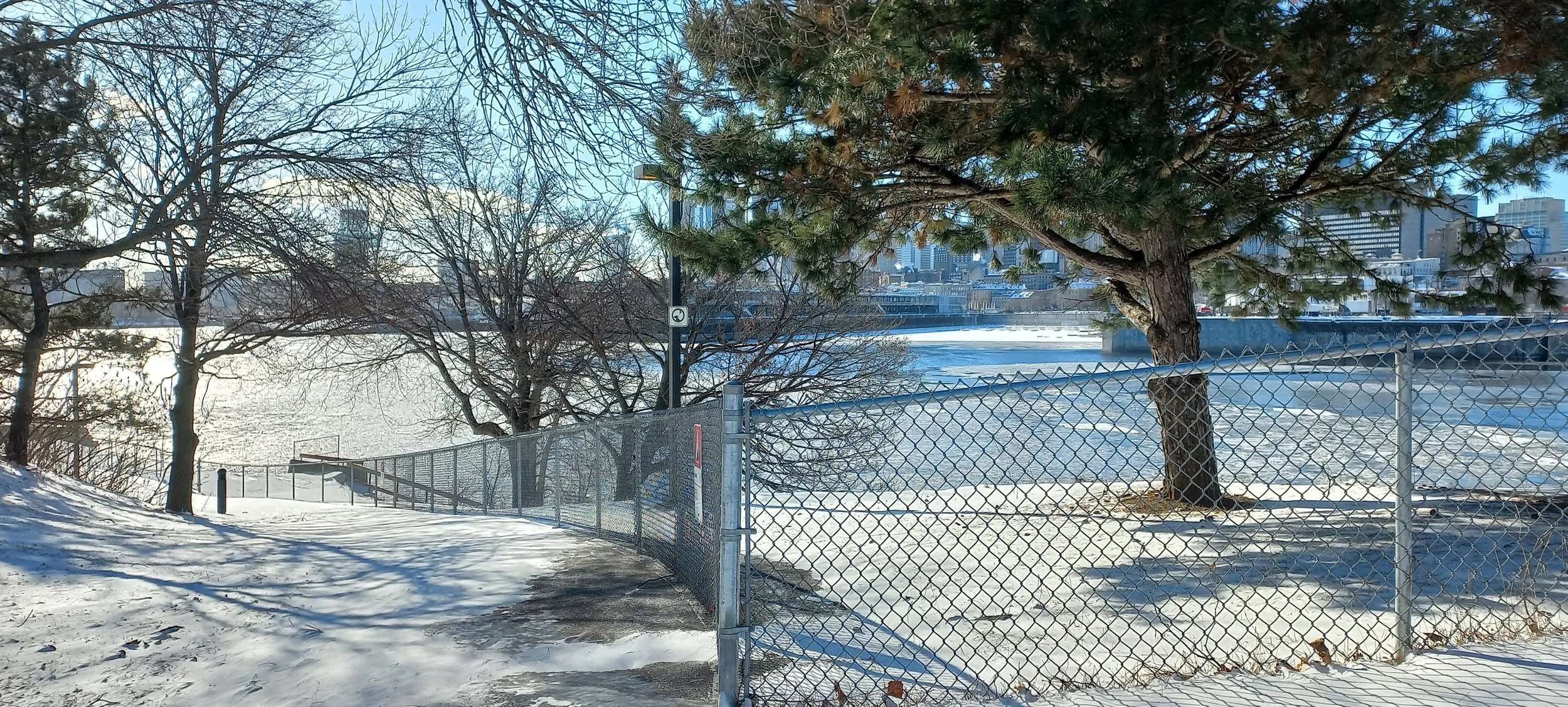
Photo 2. Parc de Dieppe in January 2025. Photo by Angelica Pliego.
Interestingly, the other side of the park had no fences, but instead a line of bushes keeps people away from a cliff above the raging current. Someone has made the calculation that this side was less inviting, and that people didn’t have to be held away from the water quite so forcefully.
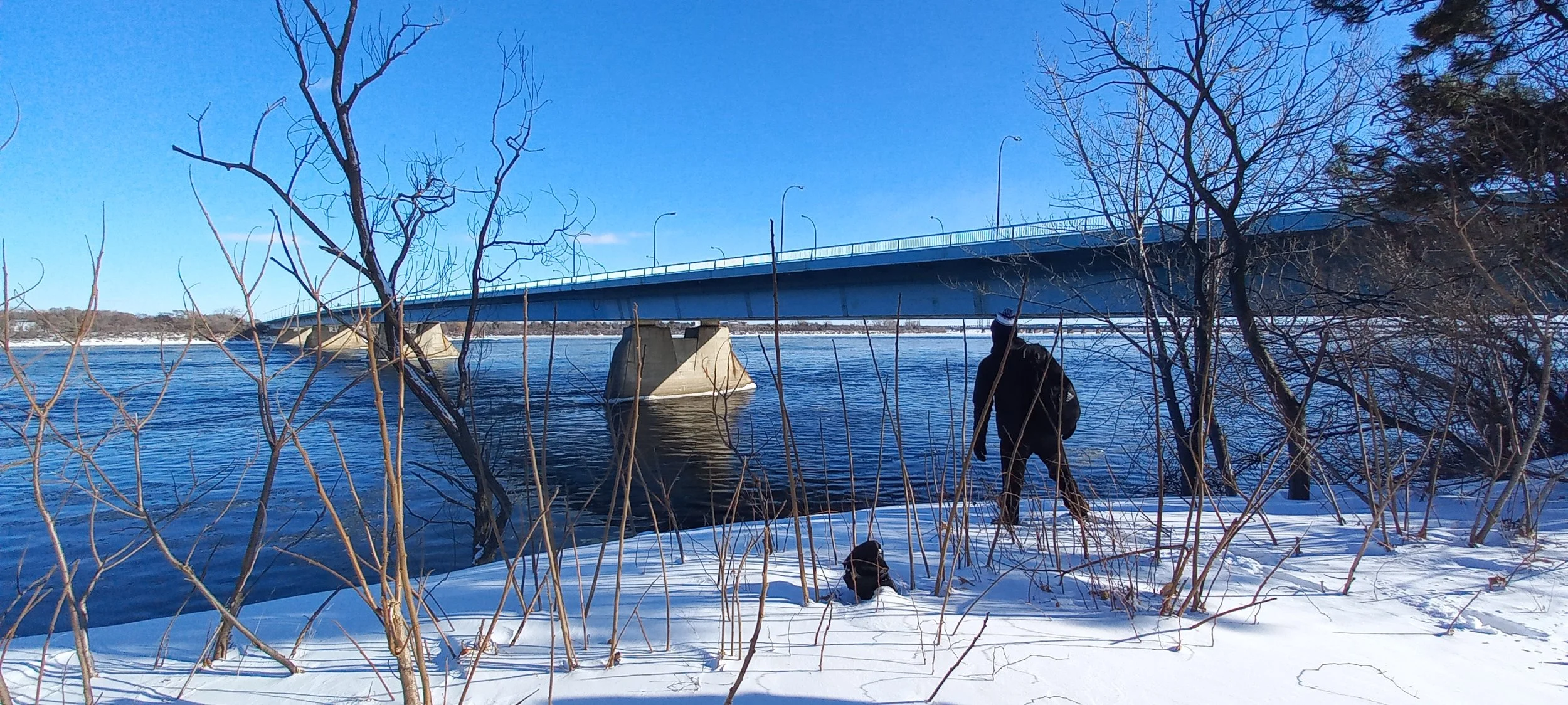
Photo 3. Kregg takes a look over the cliff. Photo by Angelica Pliego.
Our first preparatory visit to the Parc de Dieppe happened in the dead of winter, and this significantly affected how we experienced the place. There were no other humans there that day, so our experience remained focused on the water, especially its power and constant movement. At the tip of the park, two currents come together in a dramatic rearranging of waters, and that day, ice sheets flowing from either side of the peninsula were colliding along the seam in the water. We tried to record these collisions, but we were later disappointed with what we’d managed on our rudimentary equipment. This made us want to better equip ourselves for the next visit.
Verdun Beach: Seasonal extremes
Shortly after we visited Parc de Dieppe, the teaching team went to visit the Verdun beach together. It was still winter, and, like the ice fishing huts out on the water, the frozen river surface allowed us, to see the beach from perspectives normally impossible to reach. Iced-in, sheltered and free of people, the Verdun shoreline was a calming place, framed by gradients of white to grey. The silence of city life gave way to the sounds of nearby squirrels and gulls, water passing by a hole in the ice, melt running through the roots of trees, and even the snowflakes falling onto our microphones.
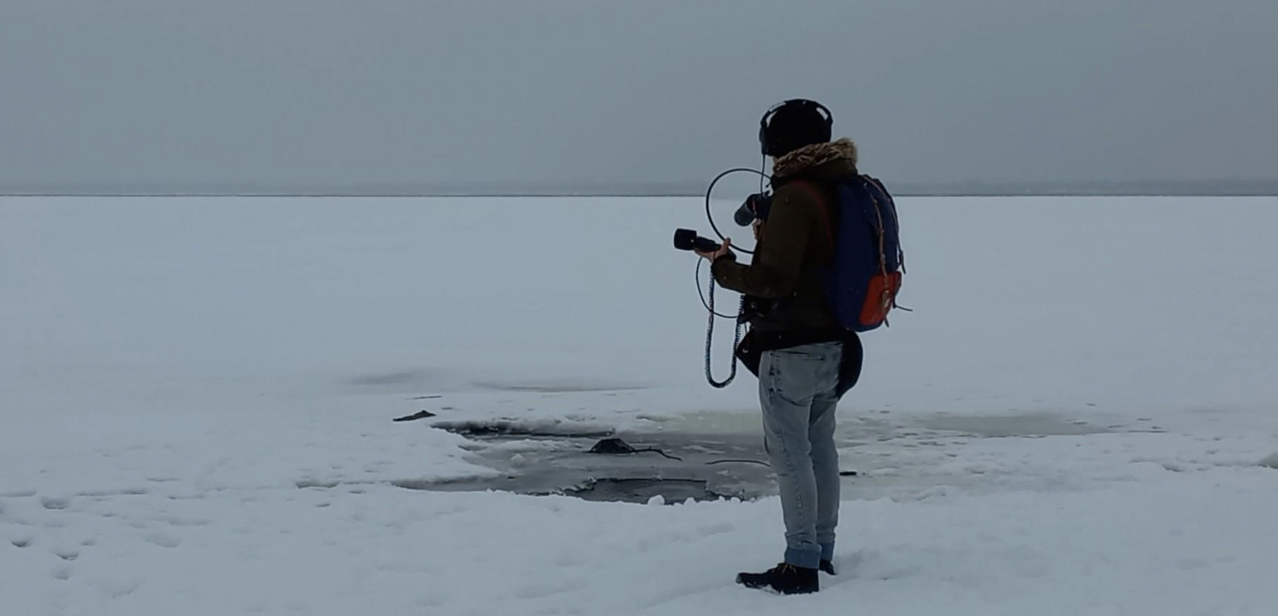
Photo 4. Patrizio listening to the water. Photo by Angelica Pliego.
In Verdun, we upped our equipment game with multiple cameras, zoom mics and Patrizio’s DIY hydrophones, and we found ourselves capturing all sorts of near and distant sounds that we couldn’t necessarily “see” on this grey day. The equipment expanded how we imagined students at the Summer Institute interacting with the shoreline as a multi-sensory space, including underwater filming and recording, close-up photography, or the sounds of birds captured at a distance. The downside was that the equipment was bulky, its presence a distraction. The experience led us to a drawn-out (and sometimes contentious) discussion in the group about how much equipment was too much. What could be used to support their awareness of the site without becoming the focus of their attention?
At the beginning of August—a week before the Summer Institute started—the teaching team returned to the Verdun site to do a dry run with the materials we had chosen for the Institute. The day was hot and humid, and the beach was marked with the debris of a recent rainstorm. We couldn’t even touch the water, which was lined with signs warning us of the dangers of the current. Summer had conjured a completely different soundscape full of cars and construction that seemed to demand a different approach to recording: we could no longer hear the subtlety of the water without using hydrophones. And this time, we had new toys: portable microscopes that opened a world of cracked rocks and bugs.
What is a shoreline?
As the Summer Institute approached, we continued to talk about the relationship between these two sites and what students might get from exploring both. The logistical difficulties of getting to Dieppe meant that students couldn’t really go to both places, so we decided to split the class in two. The question was then whether they were doing comparative research or multi-sited research. Were they studying a single shoreline from different vantage points, or were they comparing two different shorelines to learn something about what a shoreline is in the abstract?
Kregg Hetherington, the instructor for the course, felt that we didn’t need to resolve this tension right away. The inherently multiple nature of our composite ethnographic approach meant that all things could be both singular and plural, partially connected in ways that didn’t need to be fixed (Strathern 1992). There was always the option of just dropping one of the sites, but Kregg felt that choosing one at this stage might seem to favour one of the course facilitators over the other (Sarah had brought us to Dieppe, Patrizio to Verdun). Composite ethnography’s commitment to addition over subtraction (see Campos et al. 2025) meant that the easiest road, from an epistemological and group-building point of view, was to keep both, and see how the relationship between sites emerged. During the summer institute, Kregg even added a third site further up-river at Parc des Rapides, thinking this might draw out further reflection.
In the end, students in the Summer Institute never came to a clear conclusion about what a shoreline was. For all the fabulous experimental materials that students came up with in their exploration of their respective sites, the sites lived in parallel. Each group presented their own site without reflecting on the other. We provided students many ways to generate multiplicity in their projects: collaborative work, multimodal methods, and an open approach to form. So many contingencies had already emerged in each place, from seasonal (and unseasonal) weather to technical difficulties. Each site was complex and ethnographically layered on its own terms, as as such, it turned out that the most complicated (and most limiting) multiplier we gave to students during the course. On the one hand, it produced the most logistical hurdles. On the other, it really only served to answer the question “what is a shoreline?” That question was not the most interesting to any of the students in the course.
We had a hint this might happen: During preparations for the course, we were careful not to overburden students with too many methodological tools, worried that the imperatives of multimodal work might become cacophonous. Projects produced by the students were still widely varied and creative, and the teaching team all agreed that the ethic of “less is more” had been a good approach to our choice of equipment to give the students. In fact, when we decided to do a second version of the course in 2026, we restricted our methods even more, focusing in on sound recording. The question that remains is whether we might have been even better if we’d applied the same discretion to the sites. Multiplicity, it turns out, is best activated through careful subtraction.
Sources:
Campos Ortiz, M., Pasborg, D., Olaya, C., Patino, C., Simon, B., & Hetherington, K. (2025). Protocol for a Composite Ethnography. https://osf.io/tvwud_v1/
Hetherington, K. (2025). Composite ethnography: Collective encounters with emergent objects in the anthropocene. Ethnography (0)0
Strathern, M. (2004). Partial connections. Bloomsbury Publishing PLC.