
Experiments in pedagogy at the shoreline
BY POLINA SHUBINA
This is the fourth in a five-part series of posts reflecting on the Graduate Summer Institute in Mess and Methods, which was hosted by the Waterways Collective in 2025. The Institute was an intensive training in collaborative, multimodal ethnographic methods that took Montreal's rivers, shorelines, and water infrastructure as its object of research.
In this blog post, I reflect on pedagogical practices that surfaced within Summer Institute, an intensive graduate summer course that took place at Concordia University, as well as Parc Dieppe and Verdun area of the St. Lawrence River. The course introduced theoretical frameworks and practical approaches to better understand the shoreline and the river. Kregg Hetherington conceived it together with the members of the interdisciplinary research group Montreal Waterways Collective (MWC). During the course, we invited students to engage with a chosen site along the river using the research method of composite ethnography (Campos-Ortiz et al., 2025). This method relies on group work, takes into account the multiplicity of contexts and angles, and leads to assembling and composing the research findings collectively in an agreed medium(s). MWC has previously composed their ethnography in the form of zines, websites, and articles. For the Summer Institute 2025, we encouraged students to choose or work across mediums, creating a more-than-textual piece, be that an installation, a performance, or else. In the previous blog post of the series, Patrizio speaks to the challenges and generative clashes that came out of this wide-open interdisciplinary and multimodal framework.
It was not only the content and output of the course that relied on interdisciplinarity and collaboration, but also the pedagogy of the course itself. Kregg, the main instructor, co-designed and facilitated the course with the graduate students of MWC (who come from diverse disciplinary backgrounds), invited multiple guest lecturers, and emphasized collaboration as a foundational value for students’ engagement. In what follows, I will describe some pedagogical practices that emerged, what, in our opinion, worked well, and which choices we decided to reconsider for the 2026 edition and how.
Composing the course
In the winter of 2025, Kregg invited members of the MWC to take part in designing a summer course in environmental ethnography. After several months searching for an object of research, reading together, and visiting the freezing shoreline of the St. Lawrence with no clear aim, this invitation gave us direction: we were to introduce students to the research method (composite ethnography) and the sites we have worked with (Verdun and Parc Dieppe). In the coming months, we have designed a workshop, tested it through a pilot version in Verdun, and facilitated it at the Summer Institute. The workshop consisted of two major steps: a field trip and the composition of the findings into a multimodal piece.
Let’s get oriented here. The MWC is composed of graduate students from different backgrounds: sociology, anthropology, geography, information technology, design, theatre, sailing, surfing, all drawn to water and interested in experimental approaches for thinking and working around it. Mess and Methods: Experiments in Environmental Ethnography was a two-week intensive summer course, with the first week dedicated to readings and discussions, and the second to in-person workshops, walks, and fieldwork along Montreal’s shoreline. The course was meant to be interdisciplinary and multimodal, open to students from different backgrounds: sociology, fine arts, environmental studies, and more. The final project could be presented in various media: text, photo, video, installation, or sound. We invited students to explore these different “multis” through composite ethnography, a research method developed and theorized by graduate students at Concordia University. This activity became a test drive of composite ethnography for students and a pedagogical experiment for us.
Multiplicity of teachings: invited lectures, workshops, and student-teachers
Apart from the collaborative hands-on work and the theoretical dive into environmental ethnography with Kregg, the course featured interventions from visiting lecturers and workshop leaders who offered historical and artistic takes on what it meant to be with shorelines. That way Kregg was testing his own hypothesis that “by multiplying the identities of the researchers, it makes room for multiplicity in the world to emerge as well” (Hetherington, 2025: p. 5). There were twenty-four students at the graduate and undergraduate levels (while it is a grad class, Kregg has allowed some exceptions) from various universities and departments. Students had the space to share their way of thinking, their diverse disciplinary knowledge and skills in online discussions, written responses, and rounds of reflection throughout the fieldwork and co-creation. The course had an explicitly experimental design, and we encouraged students to give feedback, which had influenced the design changes for the next year; in our perception, they were ‘student-teachers’ (Freire, 2018).
Because this class was weaving a multiplicity of voices and disciplinary backgrounds, it brought every participant, including the main instructor and facilitators, somewhere unexpected. Kregg and student anthropologists witnessed (and participated in) ethnography taking multimodal form and getting their hands “dirty” with cutting out images, editing recorded sounds, and putting found objects together; some people with studio art backgrounds were learning how the process of writing can be a creative practice, and we as facilitators were trying to navigate interdisciplinary group dynamics and support students in all the havoc. In this sense, the course resonated with bell hooks’ notion of engaged pedagogy (hooks, 1994), in which learning becomes a shared practice that transforms both teachers and students, and which requires taking risks.
Composing with the site
The Institute facilitators group had visited the sites several times across the seasons in preparation for the institute. We scouted Parc de Dieppe on the coldest day of winter and walked on the ice by the Verdun shoreline, recording sounds. We have also conducted a Pilot prototype of the workshop that we, the facilitators, ran for ourselves to test the design one month before the course, on one of the hottest days of summer in July. The Pilot project span over three days: 1) a field trip to Verdun; 2) sharing observations and gathered materials (photos, videos, sound recordings, haikus, etc.) and putting together a small multimedia installation, featuring textiles, found trash, and haikus; 3) the final third day was dedicated to reflection, discussing what adjustments we should make for the upcoming course.
Before the fieldwork, students were divided into two locations: Parc de Dieppe, an artificial peninsula in front of the Old Port of Montreal, and the Verdun shoreline with Verdun Beach as a starting point. MWC experienced freezing cold during our first field trips to the sites in winter, and severe heat during the pilot project mid-summer, which has built some rigor and intimacy between us and the site (see the second blog post in the series by Angelica and Kregg, where they speak about the sites and our relationship with them). In this way, the facilitators could act as guides for the students, some of whom had never visited the sites before.
We composed the workshop together with the sites, taking into account their histories, changing landscape, and seasonal conditions. The river requires being attentive, aware, and careful. The drownings in Verdun earlier that summer, as well as the gradually increasing fences around crumbling slopes of Parc de Dieppe, reminded us of that. This knowledge and embodied experience of the sites made us more cautious in terms of equipment we offered to students and behavioral suggestions we shared. For example, we did not include hydrophones in the kit for Parc de Dieppe (as its shores were fenced off) and recommended not approaching the water without a peer at Verdun.
“It’s a draft”
Throughout the course, we have highlighted the drafty nature of this ethnographic engagement due to its timeframe: the extremely brief fieldwork and short time for final project creation. One can call it a rehearsal, a work in progress, a draft, or an experiment, depending one’s disciplinary or professional background. The same applies to pedagogy. In line with the work-in-progress nature of this pedagogical practice, we have just hosted another iteration of the Summer Institute, which was quite different from last year. Kregg again collaborated with a few graduate students from the MWS, this time giving us space to contribute with theory (and practice) and suggest changes to the core design of the course.
For the 2026 iteration of the Summer Institute, we chose to focus on listening and sound, which defined our choices of workshop leaders and guest lecturers and affected the media used by students for composition. We decided to work only at one site, the Verdun shoreline (between Verdun beach and Parc des Rapides), to explore the multiplicity through one location. The course featured more interdisciplinary readings (and “listenings”) and hands-on activities from scholars in anthropology, performance, and sound studies. Finally, to better support students of different backgrounds in navigating the messiness of collective ethnographic practice, we paid specific attention to group work: starting from a different approach to group formation, making the groups smaller (three to four people maximum), introducing little tuning-in activities (sonic and multisensory meditations and embodiment exercises), and dedicating the whole last day of the course to reflection and debrief. And in my opinion, these changes were generative: allowing students to have much more focused attention, more space for attunement within the groups, and collective reflection.
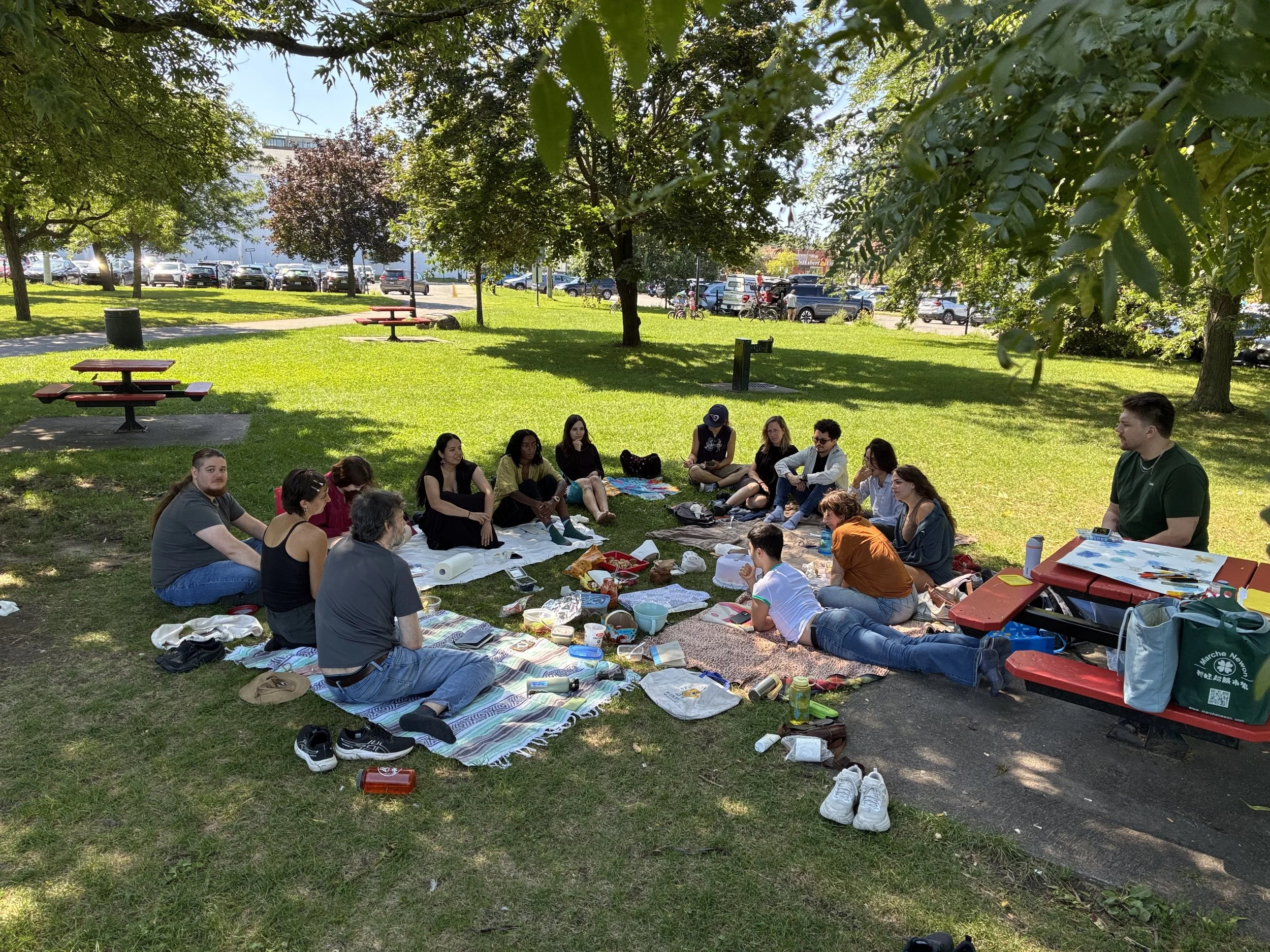
Photo 1. The last day of the Summer Institute 2026 – Reflection and a potluck picnic in Verdun. Photo by Polina Shubina
In this blog post, I have shown some aspects of the pedagogical experiments within the Summer Institute by the Concordia Ethnography Lab, namely Kregg Hetherington and members of the Montreal Waterways Collective research group. The course attempts to create space for students to draft and prototype their further engagement with the environment. And the pedagogy itself has the quality of a draft, a prototype, yet another iteration of learning how to collaborate across disciplines and differences, and understand and communicate the environment in all its multiplicity. While finishing these blog posts, we are already debriefing the second iteration of the Summer Institute and probably start imagining a new course design for next year. Stay tuned!
References:
Campos Ortiz Melina, Derek Pasborg, Carlos Olaya, Camila Patino, Bart Simon, and Kregg Hetherington. “Protocol for a Composite Ethnography.” ResearchGate, 1 Apr. 2025, www.researchgate.net/publication/390401357_Protocol_for_a_Composite_Ethnography.
Freire, Paulo, et al. Pedagogy of the Oppressed. , Translated by Myra Bergman Ramos, 50th anniversary edition, Bloomsbury Academic, 2018.
Hetherington, Kregg. “Composite Ethnography: Collective Encounters with Emergent Objects in the Anthropocene.” Ethnography, 2025, https://doi.org/10.1177/14661381251348283.
hooks, bell. Teaching to Transgress: Education as the Practice of Freedom. Routledge, 1994.